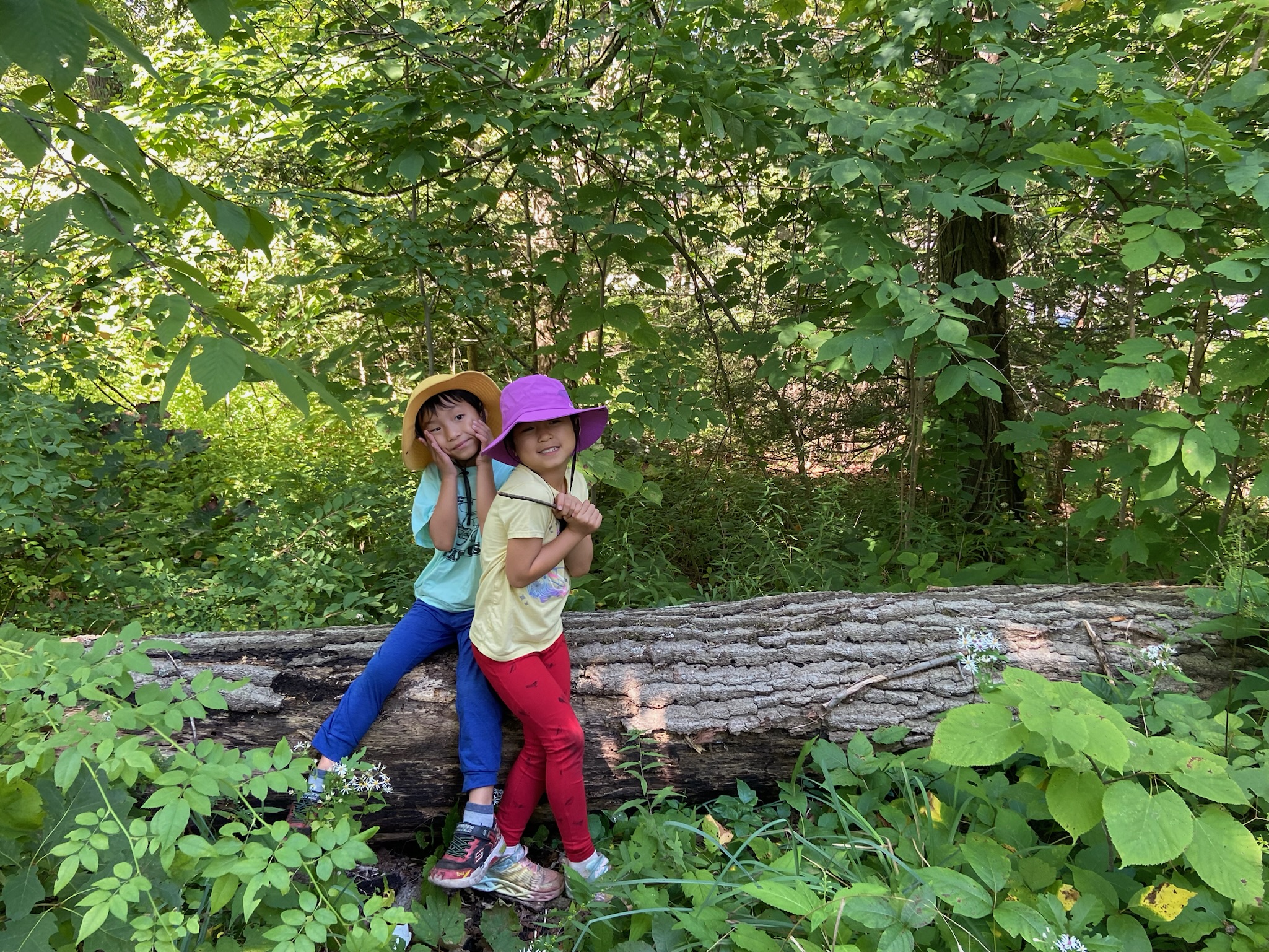
When it comes to teaching Chinese to overseas kids, many parents wonder how far they should go before slowing down. Some set their goals too high in the beginning and end up giving up when things don’t go as planned. Others start with modest goals, and once those are met, they shift their focus elsewhere.
For me, over the past eight years, I’ve never been entirely sure how much more progress my kids could make in Chinese. At first, I wanted them to be fluent in speaking. Once they reached that point, I hoped they would learn to recognize and read characters. When my daughter eventually began reading on her own, I actually felt a little lost—what’s next? Should we aim for books without phonetic guides (zhuyin)? Should she start writing short essays? It was never very clear, and few people really talk about this stage. Most of the time, it’s up to the parents to decide, adjusting based on the child’s age, learning pace, and what’s happening in life at the moment.
After my daughter started reading independently last year, I mostly let her explore books on her own and continue her regular tutoring sessions. Occasionally, I’d read with her and noticed that when she came across characters she didn’t know, she would just skip them or make something up quickly and move on. That made me realize we should probably focus more intentionally on character recognition, otherwise she might keep skimming through without truly learning.
I chatted about this with another mom, Ting, and she suggested that it’s best to reinforce character learning earlier rather than later—after all, strong reading skills depend heavily on how many characters a child knows. But how should we approach the less common characters? Some families use flashcards, others follow textbooks (though that takes forever). I’ve thought about this a lot, because as I’ve shared before—I personally really dislike flashcards. My kids don’t mind them as much, but I find the repetition unbearably boring, so I’ve never been able to stick with it.
I know I do best when using structured materials, so following a curriculum is a good fit for us. Last year, I printed the Mandarin Poster and practiced it with my daughter. She seemed to recognize most of the first 1,000 characters, with only a few unfamiliar ones. Our system was simple—whenever she didn’t know a character, I’d place a little star sticker on it so we could come back to review later.
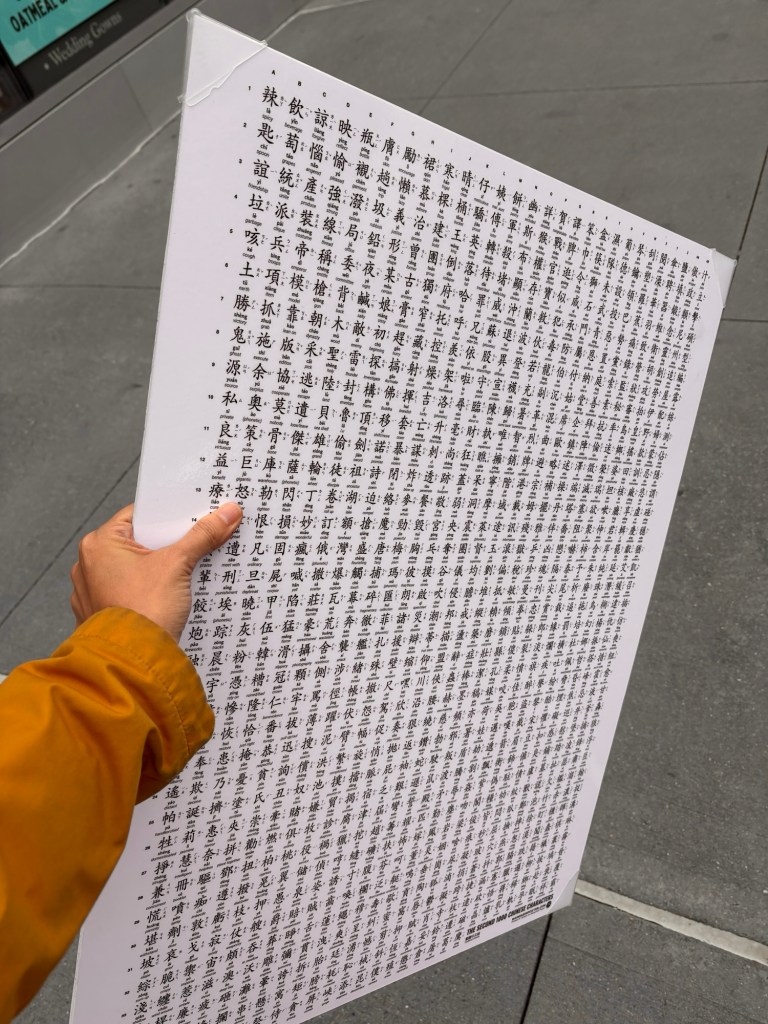

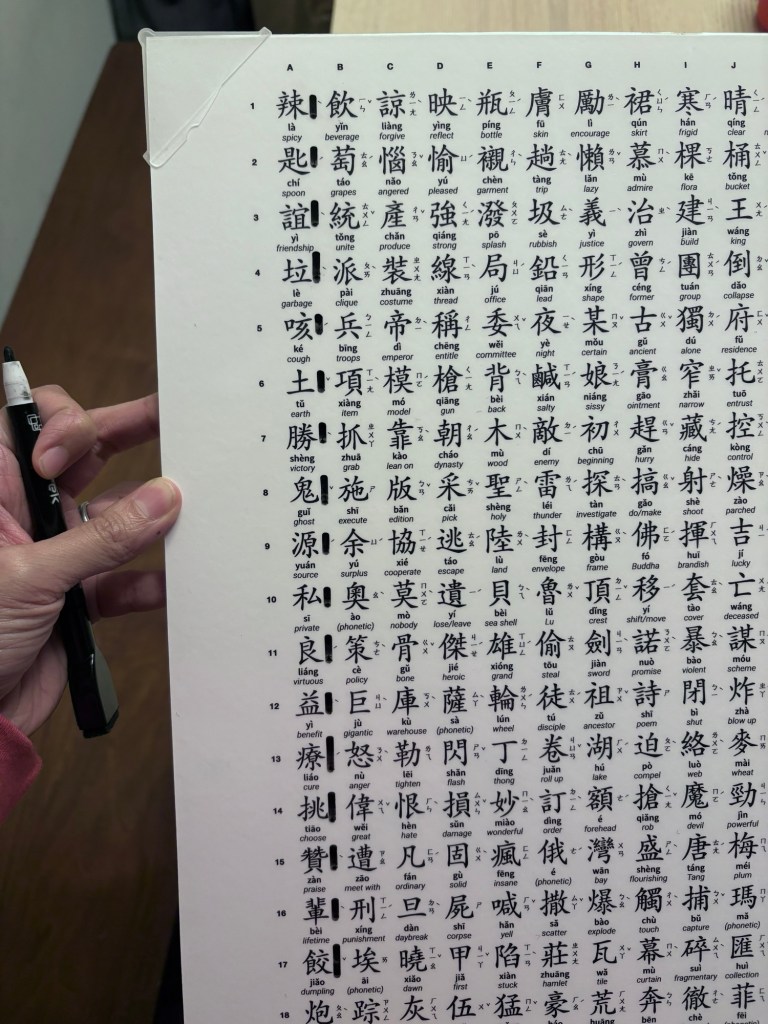
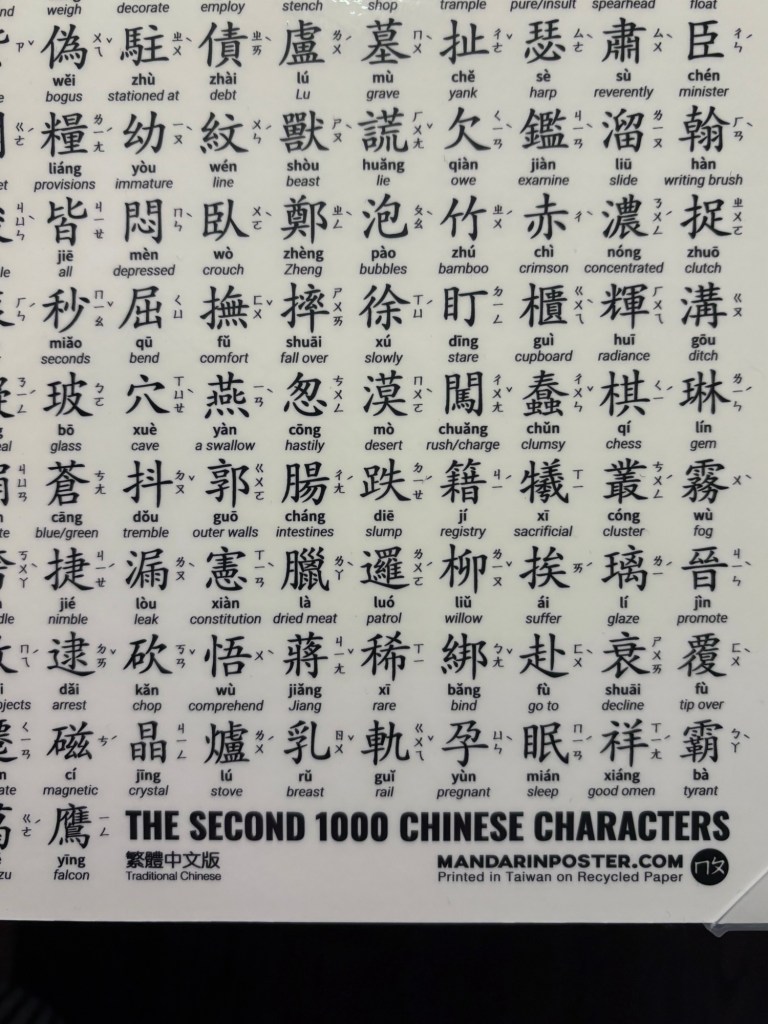
When Ting mentioned character learning again recently, I remembered that Mandarin Poster also has a second set of 1,000 characters. It seemed like the perfect next step for us. So I bought the digital version, uploaded it to FedEx Printing Service, and had it printed with foam board backing and a dry-erase finish. That way, the poster wouldn’t wrinkle or bend. It stands upright like a whiteboard, easy to write on and durable.
This time, I used a dry-erase pen to cover up the zhuyin symbols and I’m hoping this approach will help my daughter recognize even more characters with confidence.


Leave a Reply