If you’ve seen Taiwanese bridge/chapter books, you would find that the range of books is so vast that it’s hard to know which ones are suitable for my/your kids. There is also no guideline like leveled readers in the States that tells us what level these books should be.
This is where this project below started. I want to see if I can create a comprehension guideline for books for our young readers. I broke down a few categories here that I always want to know myself(like font size). Hope you find this helpful. If there are any links that don’t work, please leave me a comment below.
| Word difficulty (1~3) | 3 means the word choices are very difficult. I rate this based on how many advanced phrases and idioms a book has. |
| # of pages (1-3) | 3 means the book is very thick and one will take more than 30 mins to read. |
| Font size (1-3) | 3 means the font is as big as the one in 亮亮的成長. |
| Line spacing (1-3) | 3 means the spacing is more than one finger. |
| Story engagement (1-3) | 3 means the story is so fun that kids can’t put down the book. |
| Pic-to-text ratio (1-3) | The ratio will use 100 as scale. The first number will be for picture and the second number will be for text. |
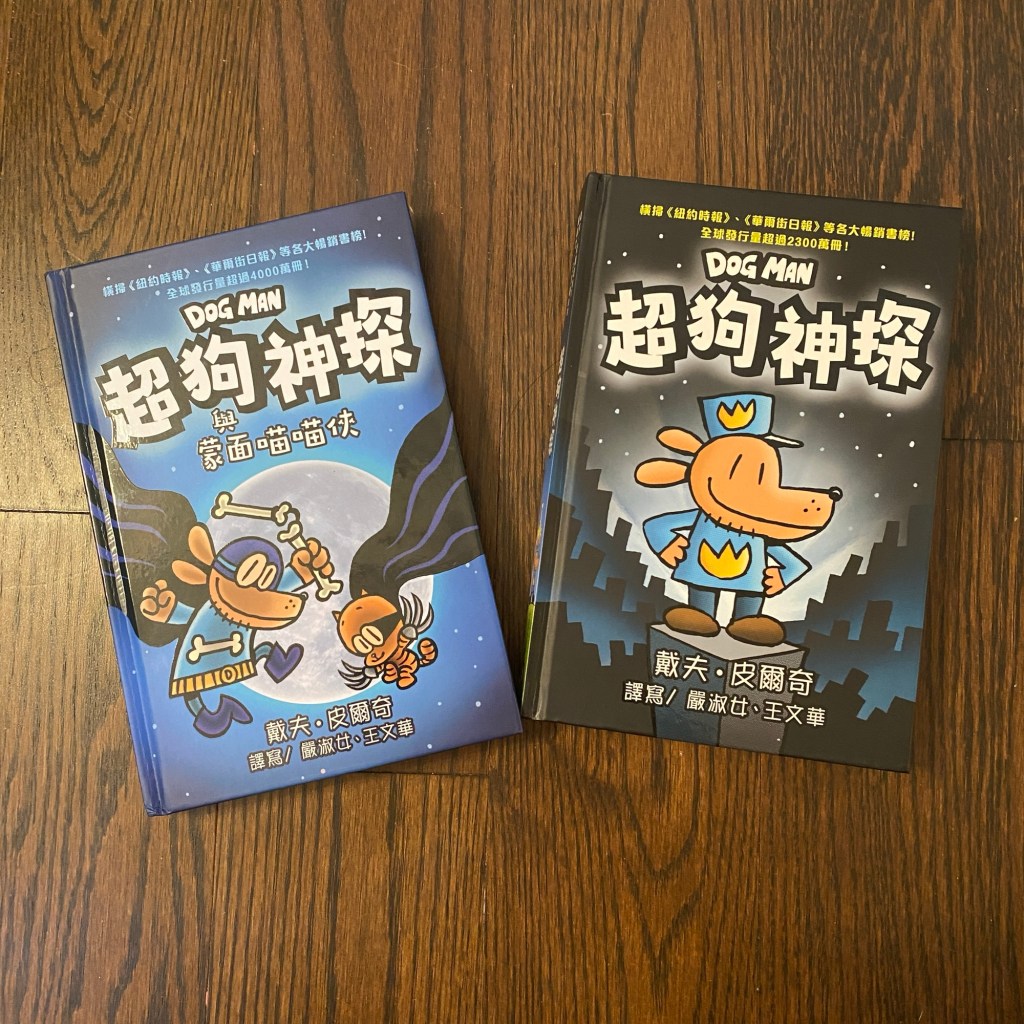
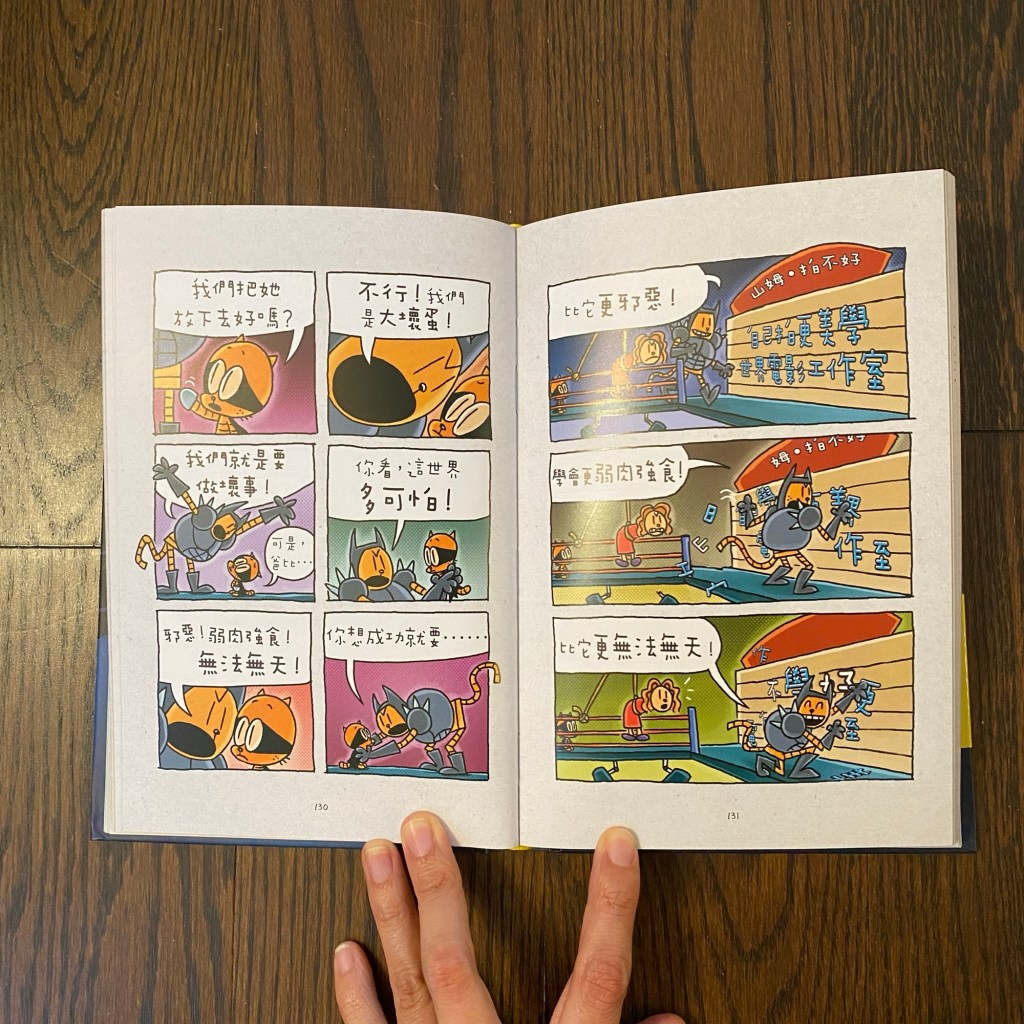
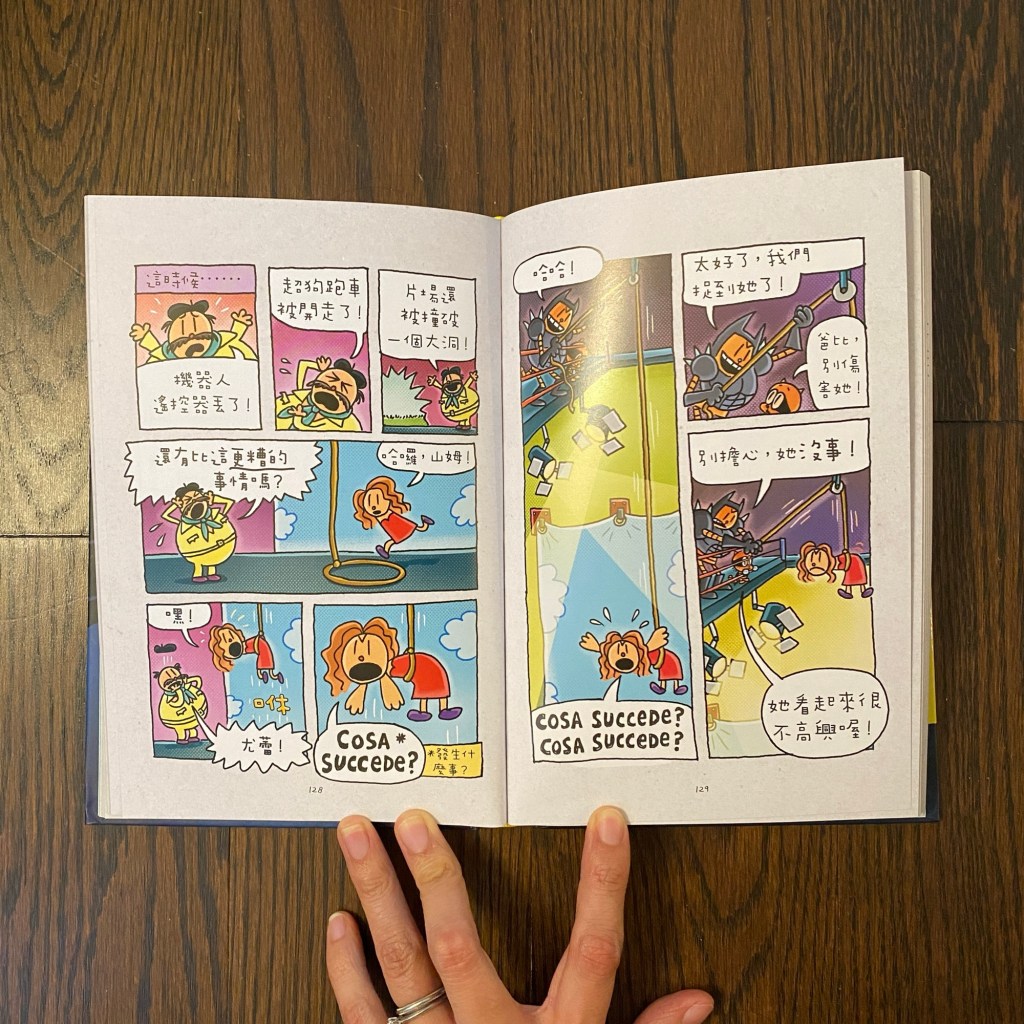
超狗神探 is a super popular comic in the US. It’s about this detective who ends up in an accident, and then a doctor does this wild surgery where he combines the detective’s body with a dog’s head. It’s already a hit in English because the story is just hilarious! Now, the traditional Chinese characters version doesn’t have zhuyin, which might make it tough for kids who usually depend on it. But honestly, it’s a cool way to get kids to read books that don’t have zhuyin if they know some characters. On the word difficulty scale, I’d say it’s not super easy. There are definitely some idioms sprinkled throughout, but each comic panel is pretty small, so the sentences are short. My kids love reading them and totally get the story even if they skip some text. I’d say it’s more for fun, and unless you’re in a class (I think Monthly Notes might cover it) where a teacher or parent goes over all the idioms, I’m not too sure it’ll really help boost your kids’ Chinese skills. But hey, I’m all for book lovers, and not every book has to be a lesson in something. One thing to note is that I can’t believe it’s out of print! I am unable to find them in Taiwan’s online bookstores (Oct 2024). I recently got two from Yo Baby and two more from Little Kozzi from Canada which I include the links below.
| Word difficulty (1~3) | 2 |
| # of pages (1-3) | 2.5 |
| Font size (1-3) | 2 |
| Line spacing (1-3) | 2 |
| Story engagement (1-3) | 3 |
| Pic-to-text ratio (1-3) | 80/20 |
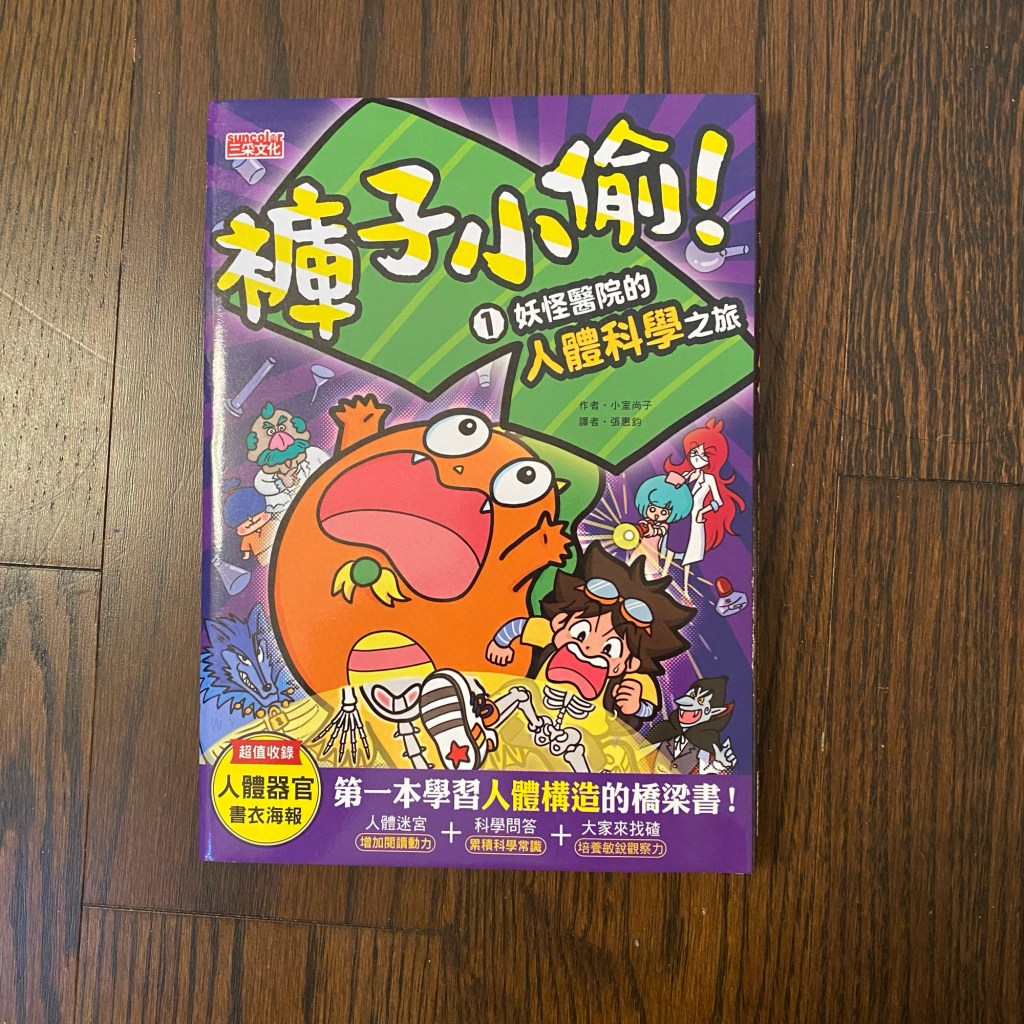

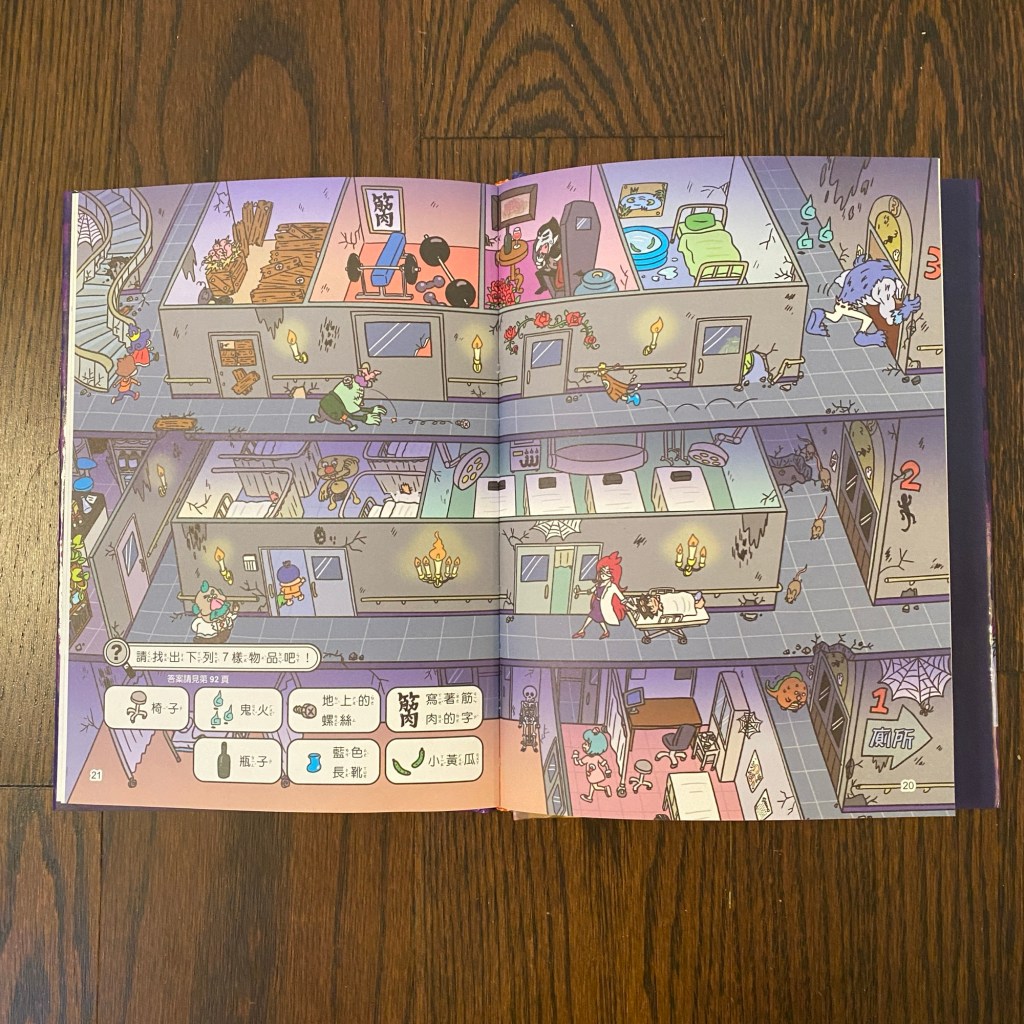
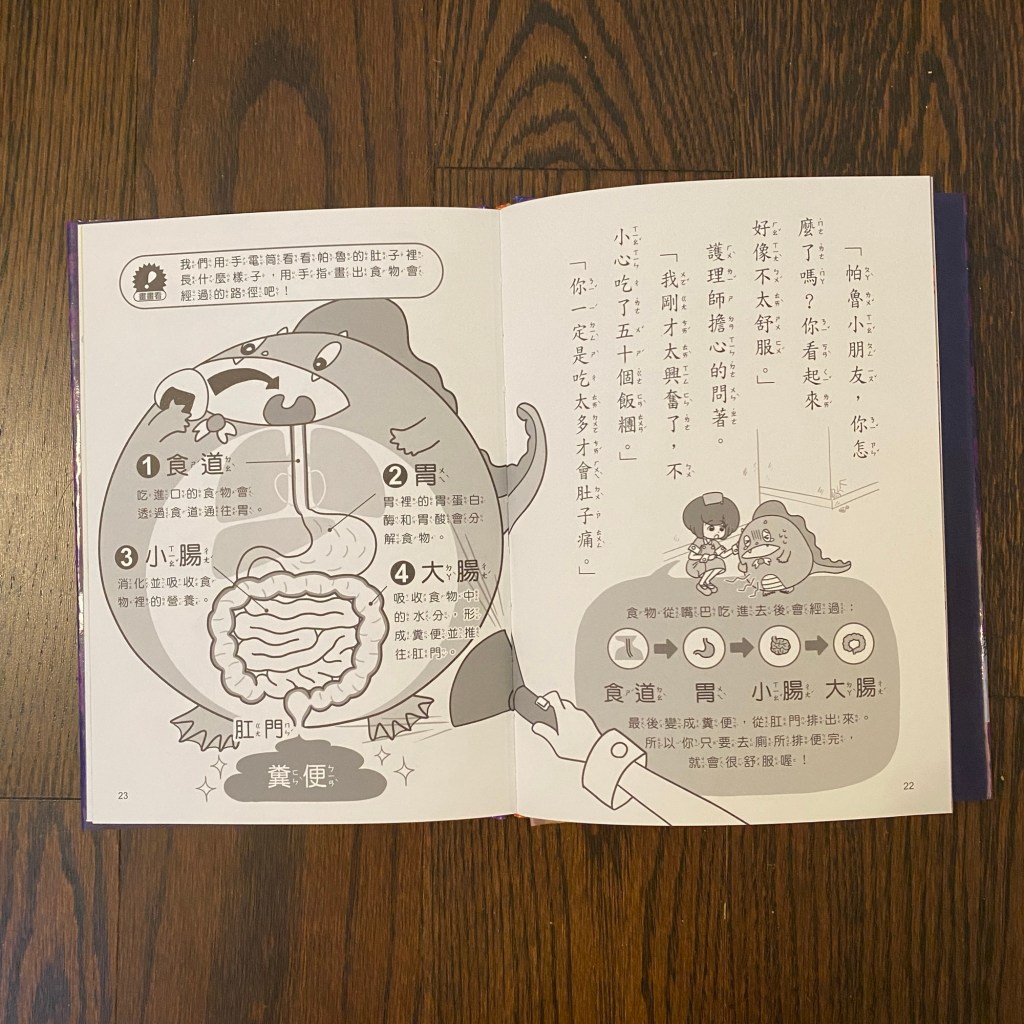
褲子小偷 is a cool bridge book that mixes some fun stuff with learning about the human body. While the overall story isn’t super strong compared to other bridge books, it definitely has some interactive games like puzzles and things to spot in the pictures. What I really love is all the vocabulary it introduces about body parts and organs. If Dog Man isn’t really for teaching, then this book totally has an educational vibe. Another thing I dig is that the line spacing is nice and wide, making it super easy to read each sentence without getting all confused when moving to the next line, which sometimes happens to my kids when the spacing is too tight. I didn’t grab the second one yet, but I totally think it’s worth getting both together.
| Word difficulty (1~3) | 1.5 |
| # of pages (1-3) | 2 |
| Font size (1-3) | 2 |
| Line spacing (1-3) | 2.5 |
| Story engagement (1-3) | 2 |
| Pic-to-text ratio (1-3) | 50/50 |
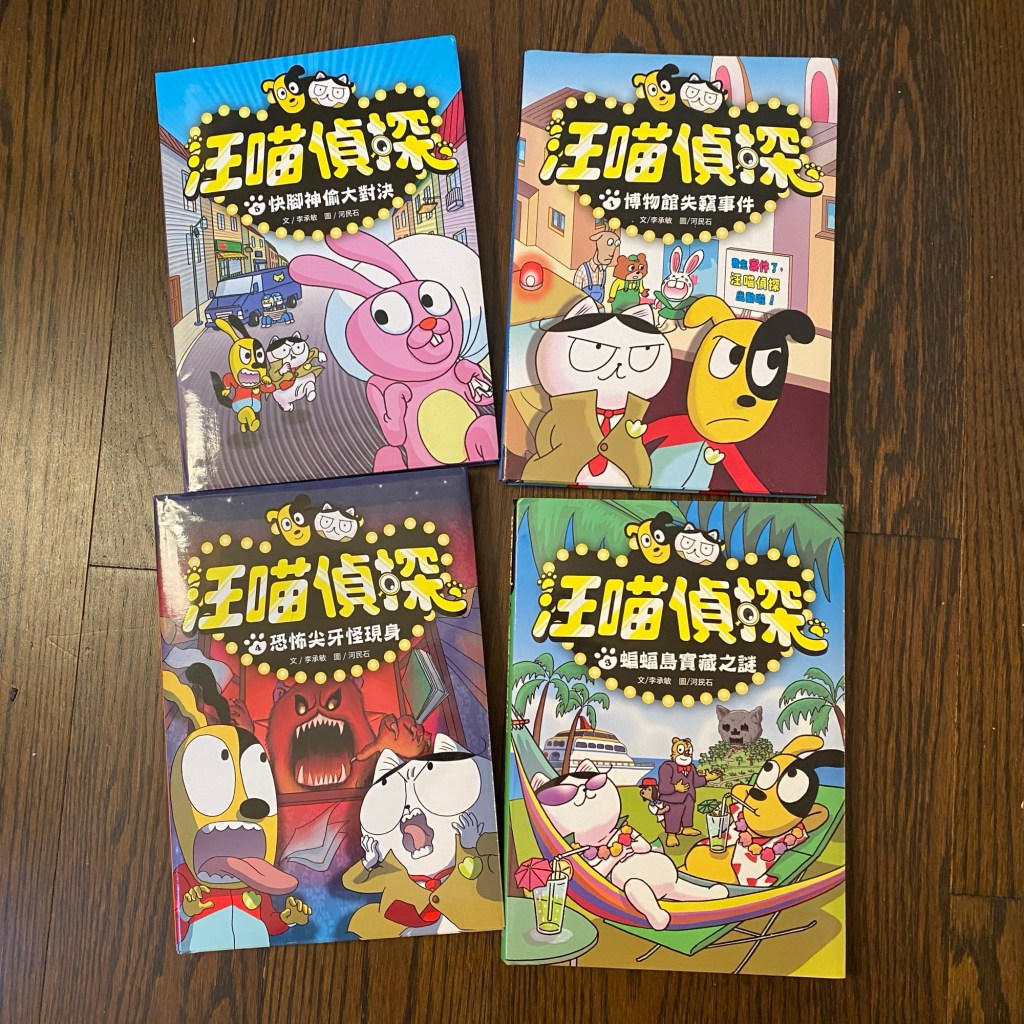
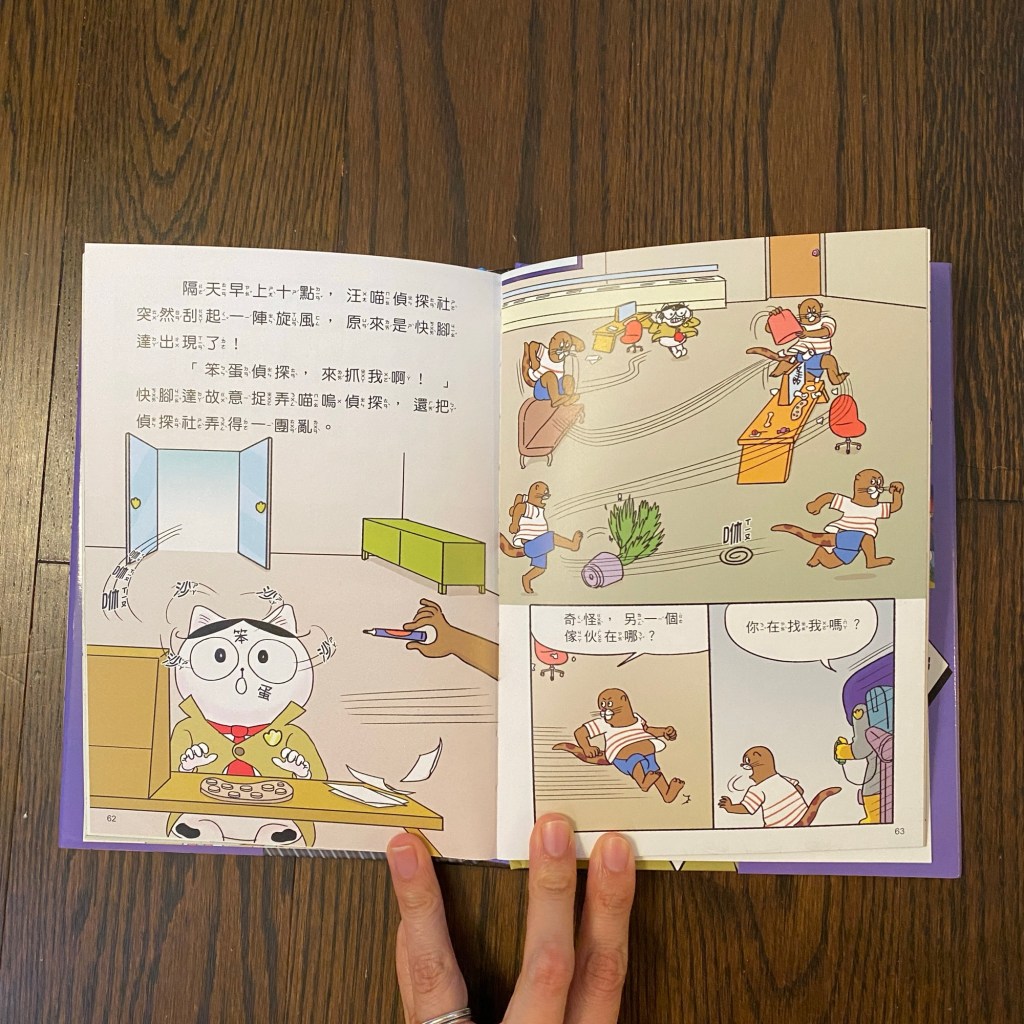
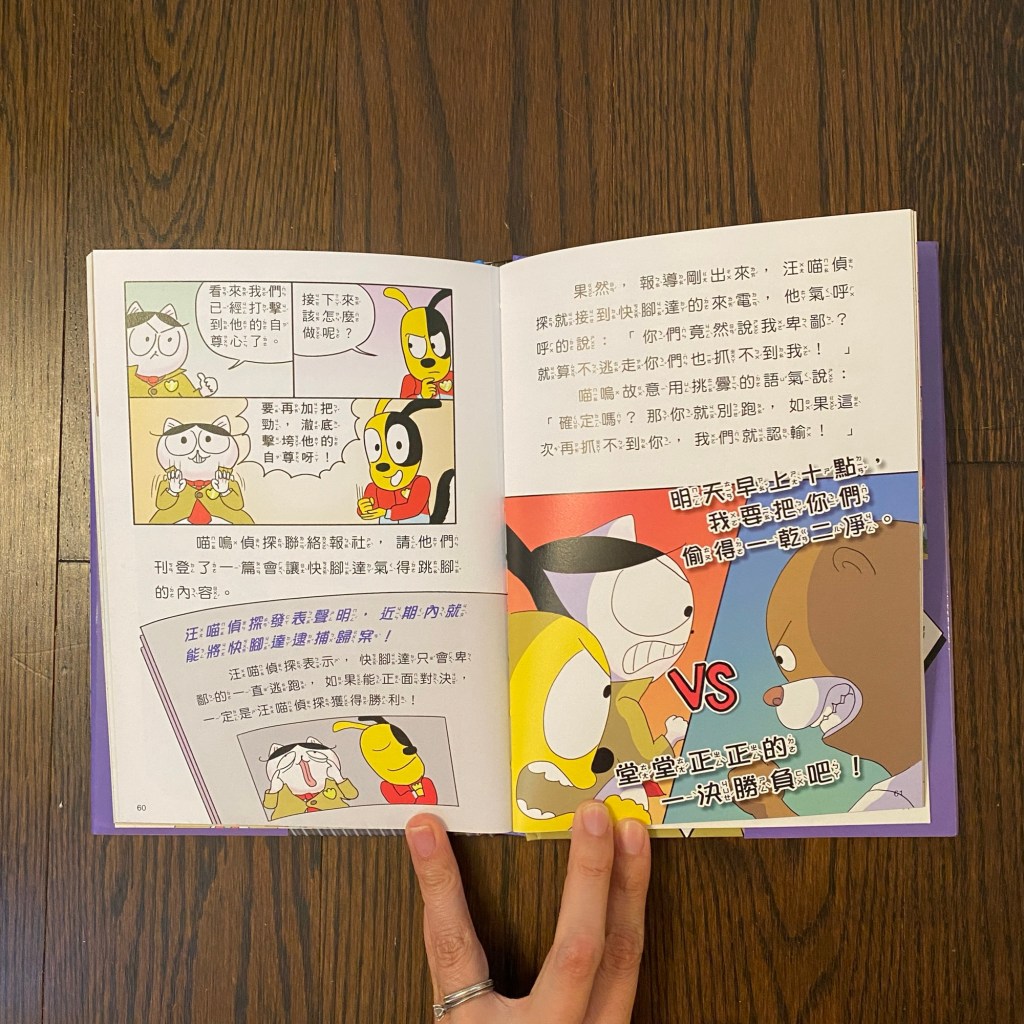
汪喵偵探 is a fun detective series that comes from Korea. It features a cat detective named 喵嗚 and a dog detective called 汪奇, who dive into all sorts of cool, mysterious, and sometimes spooky cases. People often compare it to 屁屁偵探 since they have a similar vibe. However, after reading a few books of this series to my kids, I gotta say I prefer 汪喵偵探. I find that 屁屁偵探’s case-solving skills feel kinda out there, like more fantasy than reality. In contrast, reading 汪喵偵探 feels more like those true crime shows we see on TV, but with a kid-friendly twist. Each time these two detectives are on the hunt for clues, they stick to their own rules—either checking out the clues more closely or looking at them from a different angle. The pic-to-text ratio in this book is pretty interesting too. Some pages are packed with text, while others have that comic book layout with several panels. Overall, the text density is still on the heavier side, so I think this is best for kids who have been tackling bridge books for a bit and aren’t scared off by a good chunk of reading.
| Word difficulty (1~3) | 1.5 |
| # of pages (1-3) | 2.5 |
| Font size (1-3) | 1,25 |
| Line spacing (1-3) | 1.5 |
| Story engagement (1-3) | 2.5 |
| Pic-to-text ratio (1-3) | 60/40 |
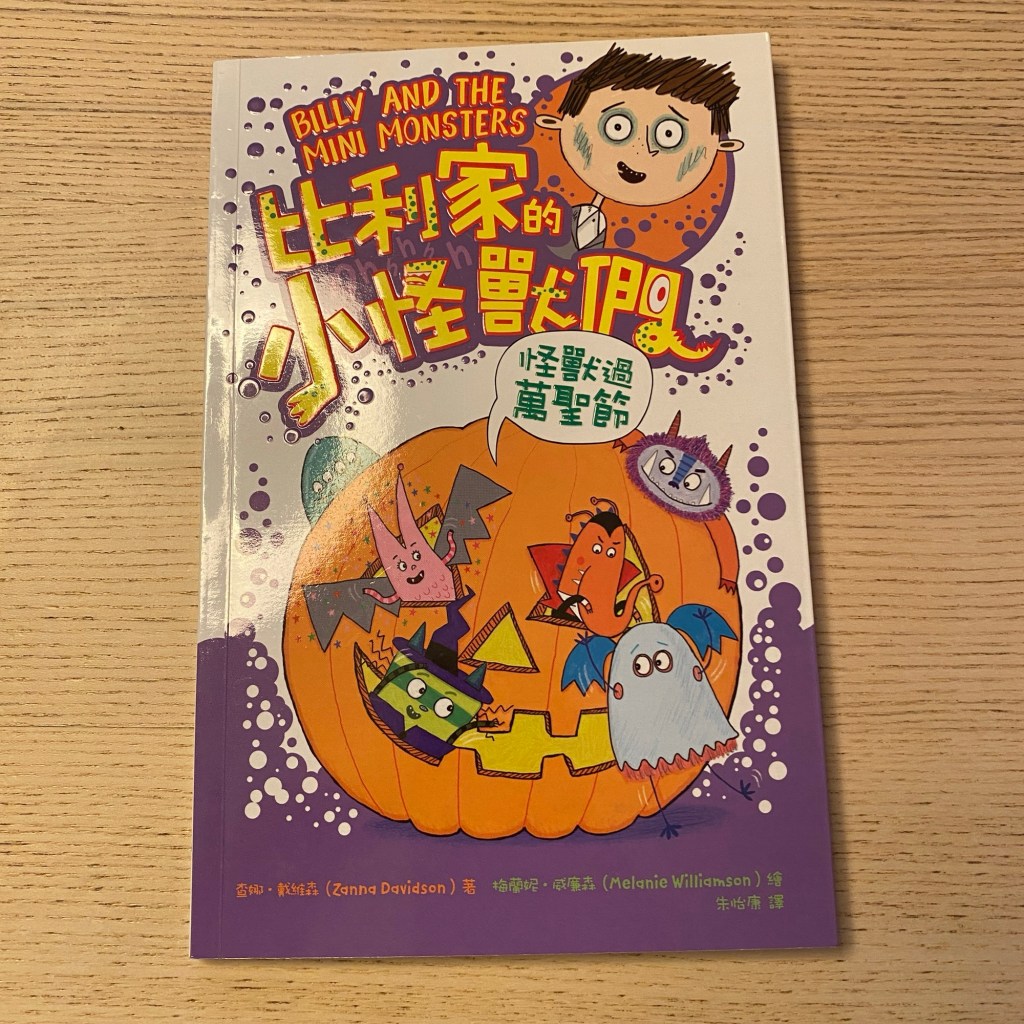
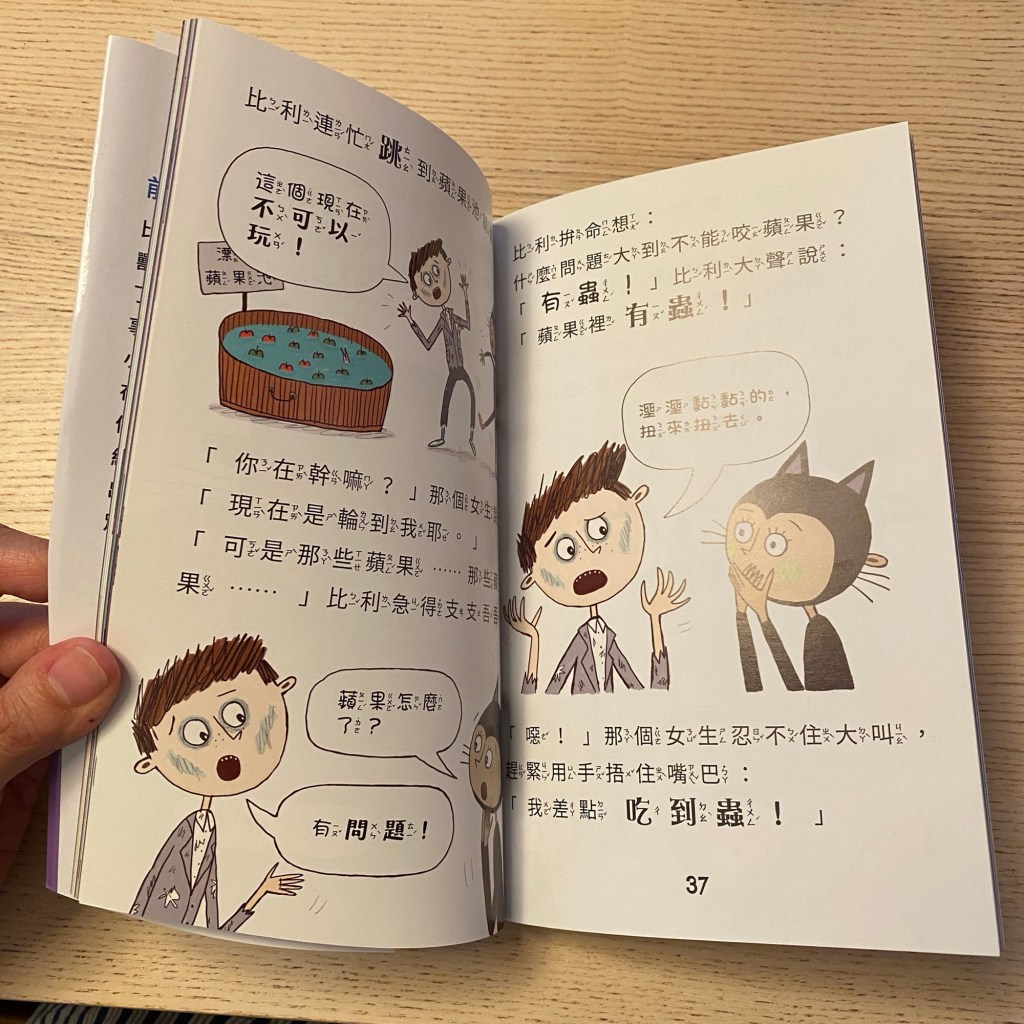

比利家的小怪獸們 is a translated graphic novel that talks about the main character, Billy, accidentally getting some little monsters. Each monster has its own personality. The story mostly revolves around Billy trying to continue his daily life events, but the little monsters always get him in trouble.
What I love the most is how thin this book is; it’s very easy to carry around during travel. Secondly, this book, even though it’s in graphic novel/comic book style, still includes zhuyin. The text is mostly colloquial, so it’s easy to follow for overseas kids. There aren’t many idioms in the text, so I think it’s an easy read for kids who know about 300–500 characters and know how to blend zhuyin. For younger kids (like age 3–5), I would suggest that parents read to or read with kids because the font is a bit small and the graphics and text can be overwhelming. The story is perfect for lower grade elementary students.
| Word difficulty (1~3) | 2 |
| # of pages (1-3) | 1 |
| Font size (1-3) | 1 |
| Line spacing (1-3) | 1.5 |
| Story engagement (1-3) | 2.5 |
| Pic-to-text ratio (1-3) | 50/50 |

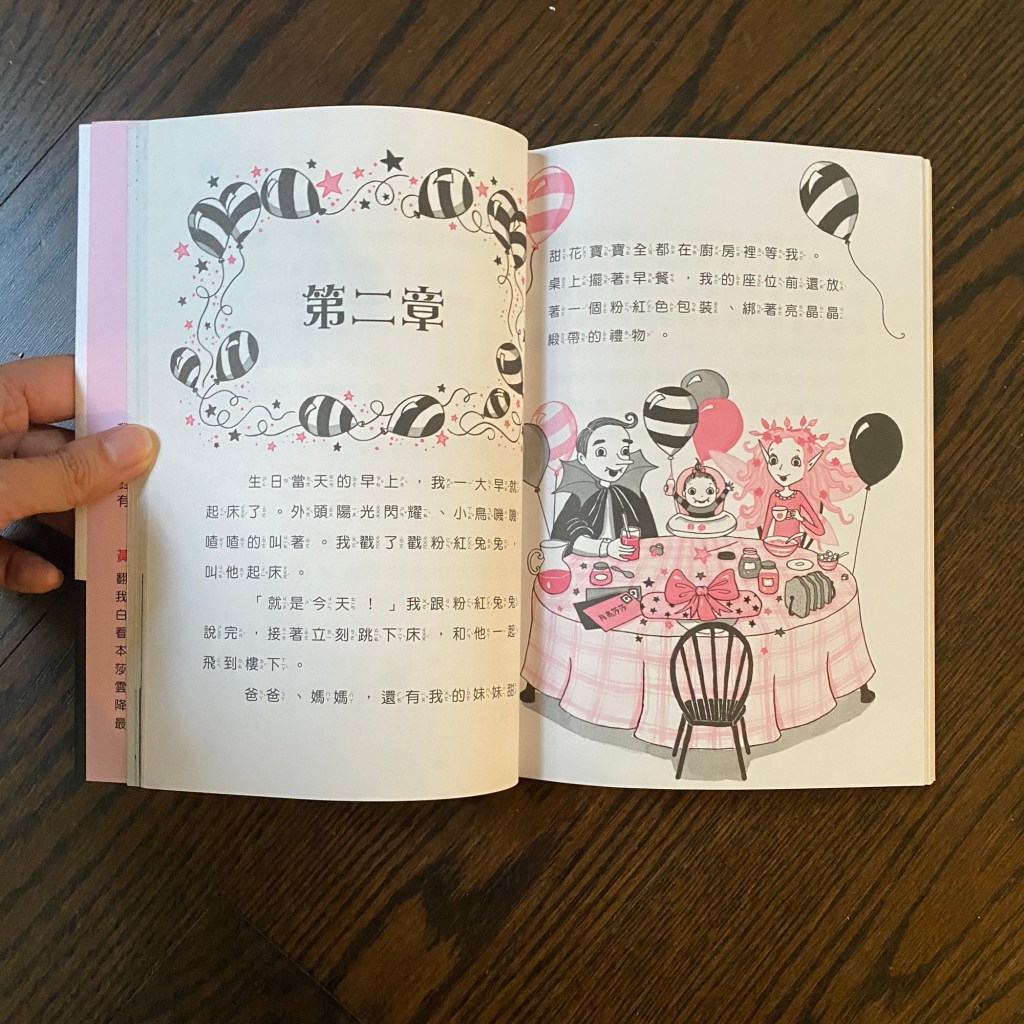

月亮莎莎 is a translated chapter book/bridge book for slightly more advanced readers than 比利小怪獸. The story follows the main character 莎莎, who is half-fairy and half-vampire. Each book talks about one event or activity that occurs in her life. The one shown here is about her birthday party and how she wants to celebrate like a human, but her parents don’t really know how to celebrate a human birthday.
Reading-wise, I do find it difficult for Little Bun, who probably knows about 700–800 characters and is currently taking the second-grade Taiwan curriculum. There are quite a lot of advanced phrases and idioms that, if the child doesn’t know, he/she can skip, and still understand, but it’s not an easy reader for Chinese beginning learners.
What I like about the book is that the story really emphasizes the duality of her half identity. Each story is different, but they all talk about how 莎莎 tries to break through some difficult decisions or struggles she has. I’d say the content is actually good for lower-grade students because the story shows that there isn’t a right or wrong answer for everything. It’s okay to be different and just be herself or himself.
| Word difficulty (1~3) | 2.5 |
| # of pages (1-3) | 2.5 |
| Font size (1-3) | 1 |
| Line spacing (1-3) | 1 |
| Story engagement (1-3) | 2 |
| Pic-to-text ratio (1-3) | 25/75 |
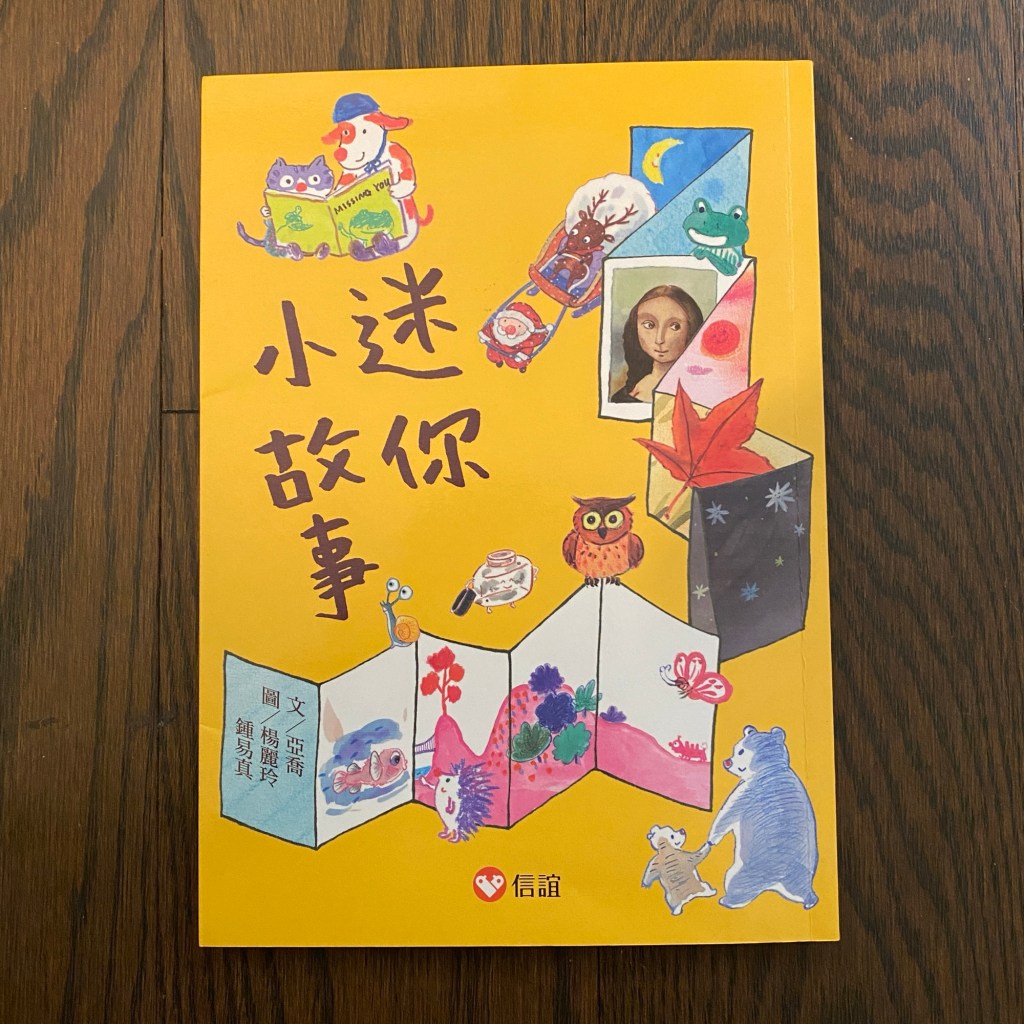

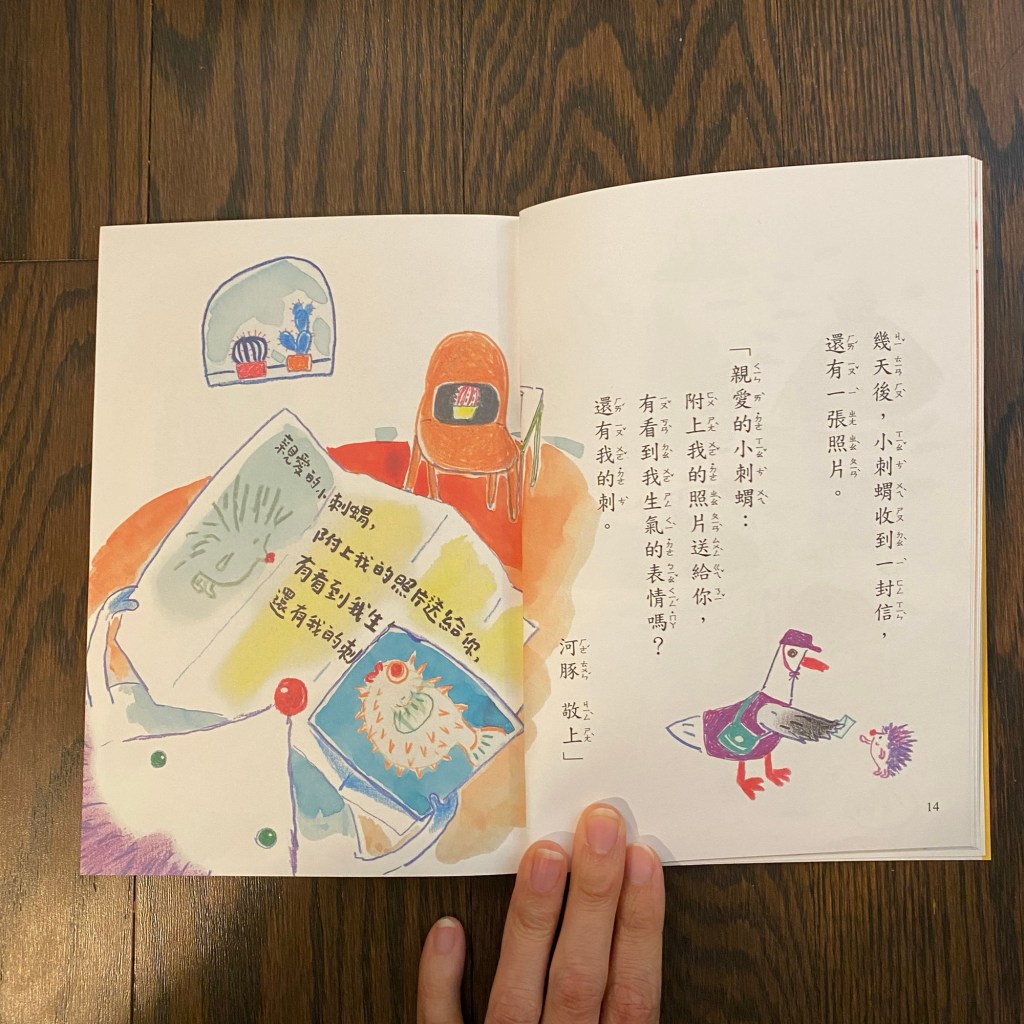
迷你小故事 consists of 16 mini stories. Each story is about 3–4 pages. Most of the stories are about animals with some kind of philosophical ending, which I found quite neat.
The philosophical storyline can be confusing for early readers, but I found this book to be very easy to read because of how short each story is. The story is a bit witty, with animals being the characters and sharing their thoughts about the circumstances they’re in. Besides being short, each sentence is also relatively brief. I think this is perfect for kids who just start to learn to read Chinese books. With early readers, parents can try to have the child read one story at a time so it’s not too much of a burden.
The zhuyin in this book is quite clear and big. Not every bridge book is like this. Some books have zhuyin that is very close to the character or in a very thin line, making it hard to read, but that’s not the case with this book.
| Word difficulty (1~3) | 1.5 |
| # of pages (1-3) | 2 |
| Font size (1-3) | 2 |
| Line spacing (1-3) | 2 |
| Story engagement (1-3) | 2 |
| Pic-to-text ratio (1-3) | 60/40 |

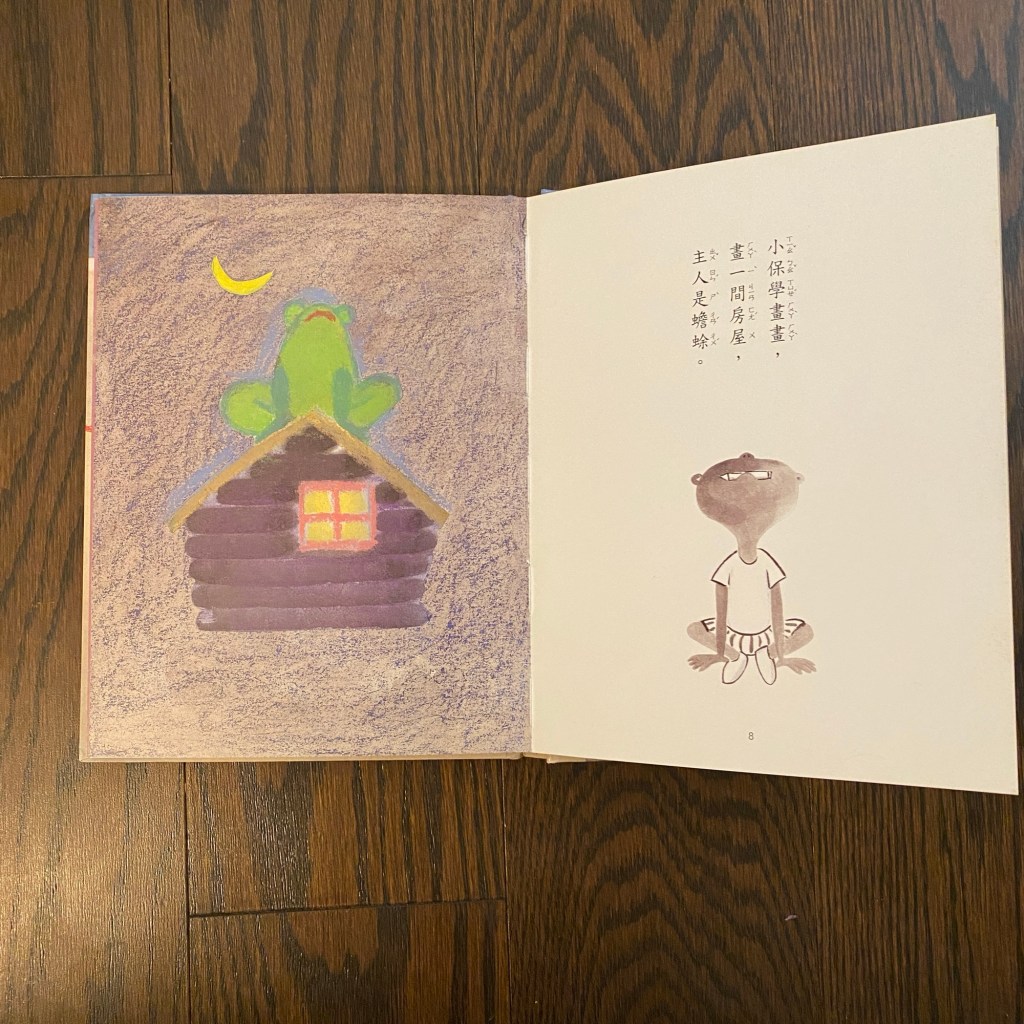

小保學畫畫 is another book that is perfect for early readers. The book follows the main character 小保, and each chapter tells a short story about his adventures.
Little bun actually read this early on after she finished Sagebook 500. This book is similar to 迷你小故事, with each sentence being short and each chapter only a few pages long. I found the story to be quite easy to digest, but it does have a few advanced phrases that I don’t think are easy for early readers to understand on their own. The writing style is more poem-like, so it’s not very colloquial. Most texts are on a white background, which also makes it easy to read. The illustrations nicely reflect the text. I’d suggest that parents read with their children, as there are phrases that may not be too easy to understand.
| Word difficulty (1~3) | 2 |
| # of pages (1-3) | 2 |
| Font size (1-3) | 1.5 |
| Line spacing (1-3) | 2 |
| Story engagement (1-3) | 2.5 |
| Pic-to-text ratio (1-3) | 70/30 |
 Bao & Bun's Bilingual Journey