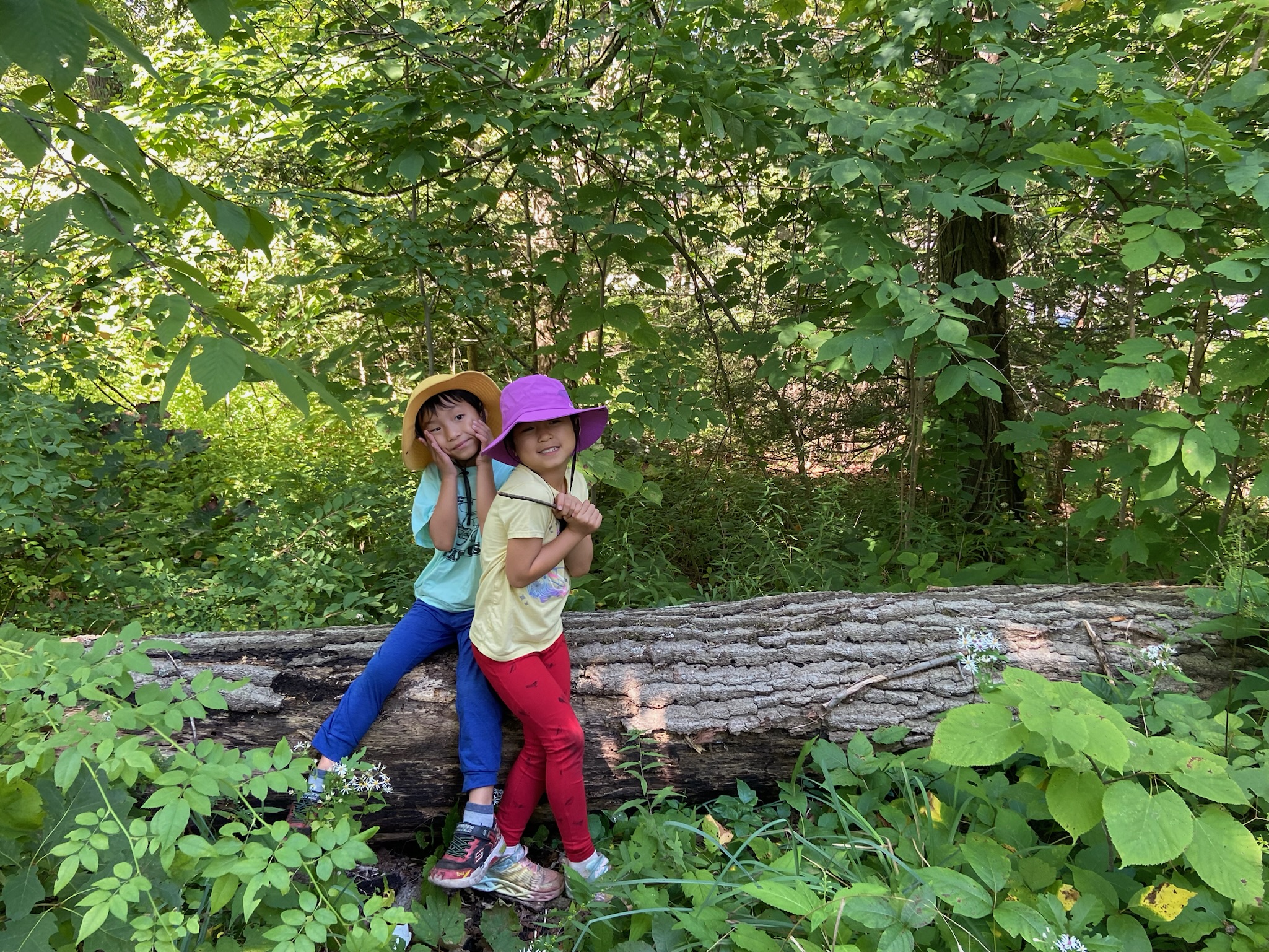
Summer break is right around the corner, and lately I’ve been thinking about how to use this time to boost my kids’ Chinese reading skills. Last year, I created weekly worksheets, and while my kids enjoyed them, I was completely overwhelmed trying to keep up. This year, I’ve learned my lesson and started searching for ready-made materials that don’t require much prep.
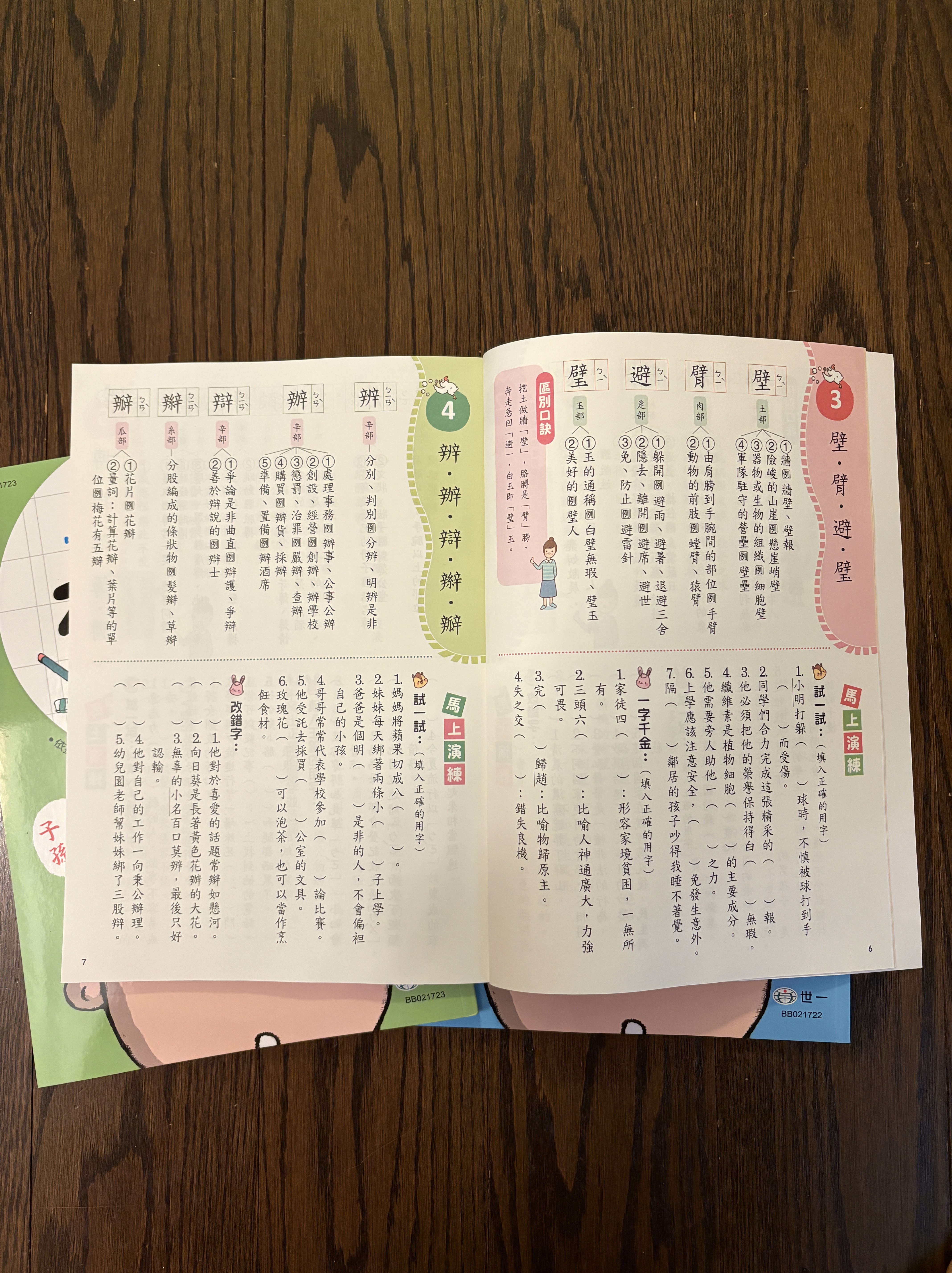
Little Bun’s summer Chinese work
Little Bun’s summer routine of working through a character recognition and commonly confused characters workbook has gone more smoothly than I expected. It’s shown me that as long as Chinese learning continues steadily, there’s always more to learn and plenty to practice.
Every evening before or after dinner, she works on one commonly confused character. These characters usually look very similar, and some even sound the same, but their meanings are different. So each time, I walk her through the meaning of every character before she does the exercises below.
Often, the practice questions use idioms or phrases that she hasn’t learned yet, so I do my best to explain or help her find the answers.
This workbook is definitely above her current Chinese level, but I’m hoping that through this kind of training, she’ll keep expanding her vocabulary and learning to recognize a wider variety of characters.


Little Bao’s summer Chinese work.
There are so many comprehension workbooks from Taiwan. A few years ago, I wasn’t a fan of using these kinds of materials, but I kept hearing from other parents that their kids actually enjoyed the short readings. I flipped through a few and realized I really liked the variety of topics and how the format encourages wide reading. It exposes kids to different genres and types of knowledge in bite-sized formats.
During our last visit to Taiwan, we received a copy of 《閱讀易上手》 when my son participated in a 2nd grade class through OCAC. We never used it at the time, but now I’m planning to use it this summer. I also asked my son’s Chinese tutor about the benefits of using reading workbooks like this, and she said the follow-up questions often introduce synonyms or rephrased language, which helps build vocabulary.
We’ve never used this kind of workbook before, so I’ll share how it goes!


Why I chose this type of reading material for summer? Like many working parents, my kids will be in full-day summer camps, so their schedule is about the same as during the school year. But the key difference is that we’re not rushing out the door in the morning or scrambling to finish homework at night. That gives us a little time—maybe 30 minutes in the morning or evening—to squeeze in some extra reading.
Lately, I’ve noticed that when my son skips reading for a few days, it really shows. He loses fluency fast. Since his patience is limited, short daily reading sessions work better than longer ones. That’s why I wanted to try a workbook with short articles—to help him rebuild the habit. Unlike his sister, who’s a natural bookworm, he still needs a little push.
Mid-summer review:
Little Bao’s reading comprehension practice has also been going pretty smoothly. I think the biggest benefit of this practice is that he’s learning a lot of formal, written vocabulary—words that typically only appear in written texts. Another advantage of this book is that the reading comprehension questions at the end of each passage are very short, so overall, asking him to do it daily hasn’t met much resistance.
Most of the stories are a bit dry but still somewhat interesting, so we treat it as a quick assignment before he gets to watch TV or play.
That said, I’ve also realized through this that he still needs to expand his character recognition. Looks like we have a new goal for the coming year.
 Bao & Bun's Bilingual Journey
Leave a comment