OCAC is a free program designed to give kids with Taiwanese heritage the opportunity to temporarily experience Taiwan’s local schools for 5–30 days.
We just returned from our second OCAC trip, where the kids attended second grade at a Taipei elementary school. For those who read about our first experience, it was generally positive. This time, however, things felt a bit different.
My twins were placed in two separate classes at my request. On the first day, they each received a stack of textbooks, which seemed comprehensive at first. However, as the days went on, the teachers communicated homework assignments through a communication book(聯絡簿), and I often discovered that one or two assignments required workbooks we didn’t have. I raised this issue with both teachers. One was accommodating and made copies of the missing worksheets for us, while the other sent me a digital version of the workbook and asked me to print it myself. This wasn’t an issue during our first OCAC experience in first grade, where everything we needed was provided. It seems that different schools have their own ways of managing OCAC students, and the level of effort teachers put into integrating these students varies significantly.
For families who are simply looking to give their kids a taste of Taiwanese school life, these gaps might not matter much. However, since my goal was for my kids to fully participate, it was frustrating to encounter these inconsistencies. That said, my kids were unbothered, as less homework meant more free time for them!
I also requested that my kids to participate in the tests alongside her classmates. Over the two weeks, we did several Chinese and math tests. This was when I realized that our focus on reading over character writing at home had become a challenge. My daughter, who can independently read bridge books and knows around 700–1,000 characters, struggled with the writing-heavy Chinese tests. While I encouraged her to take the tests regardless of her performance, not being able to write as quickly or fluently as her classmates upset her. On the other hand, both kids did well in math tests, as the questions included Zhuyin, which helped them understand. Some concepts were new to them but were easy to pick up.

Despite these frustrations, there were many positives. One highlight was a school performance where all students gathered in the auditorium to watch an upper-grade class perform taekwondo. My kids loved it. Another highlight was recess, which happens for 10–20 minutes after every class. Both kids enjoyed playing tag with their classmates and made the most of this unstructured playtime.
My daughter made friends from the first day, and on the last day, many of her classmates came out to say goodbye when I picked her up.

All in all, this was still a positive experience for the kids. Initially, I used OCAC as a benchmark to assess their Chinese proficiency. Little did I know, we’ve already hit that benchmark. My kids are fluent in speaking, but keeping up academically in Taiwan no longer seems feasible— and they’re only in second grade. This realization has me rethinking the purpose of attending OCAC in the future.
That said, OCAC remains a valuable program, especially for families who don’t attend dual-language or weekend Chinese schools. It provides overseas kids with a glimpse into a world where Chinese is used daily—both in academics and social life—and might inspire them to see the value of learning the language in a way that’s hard to replicate elsewhere. While summer camps are another option for connecting kids to Taiwan, they now seem to have more overseas participants even for local camps, making it harder for kids to truly interact with local peers. In contrast, OCAC offers a rare opportunity for children to integrate into a local school environment and form relationships with Taiwanese classmates, even if only temporarily.
For now, I’m undecided if we will continue to participate in OCAC. As my kids move into third grade, I anticipate they’ll struggle even more with the test portions of the program. This year, when they didn’t participate in tests, they were simply given a book to read, which felt like a missed opportunity for engagement. With only two weeks each year to dedicate to the program, I’m questioning whether the time and financial investment are worthwhile. That said, when I asked both kids if they’d like to return, they both answered with a resounding yes.
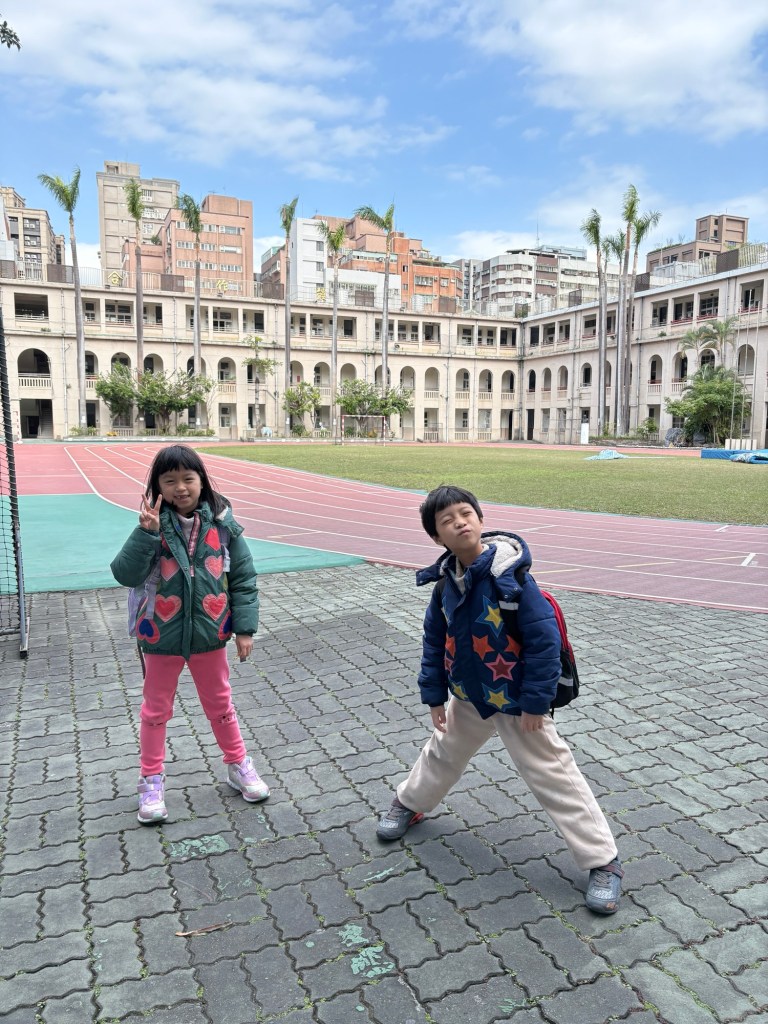
For families like ours who already attend a dual-language school, where my twins study Chinese daily, the OCAC program feels more like an intensive version of their regular school experience. Because of this, the impact of OCAC is somewhat diminished for us compared to families whose children don’t have regular Chinese instruction.
Moving forward, I think I may prioritize summer camps over OCAC. While summer camps don’t have the academic rigor or structure of OCAC, they are less stressful—no homework, fewer expectations, and plenty of fun activities. Although it’s harder for kids to form lasting friendships in week-long summer camps, the enjoyable experiences and cultural exposure might make them a better fit for our family’s goals.
 Bao & Bun's Bilingual Journey
Leave a comment