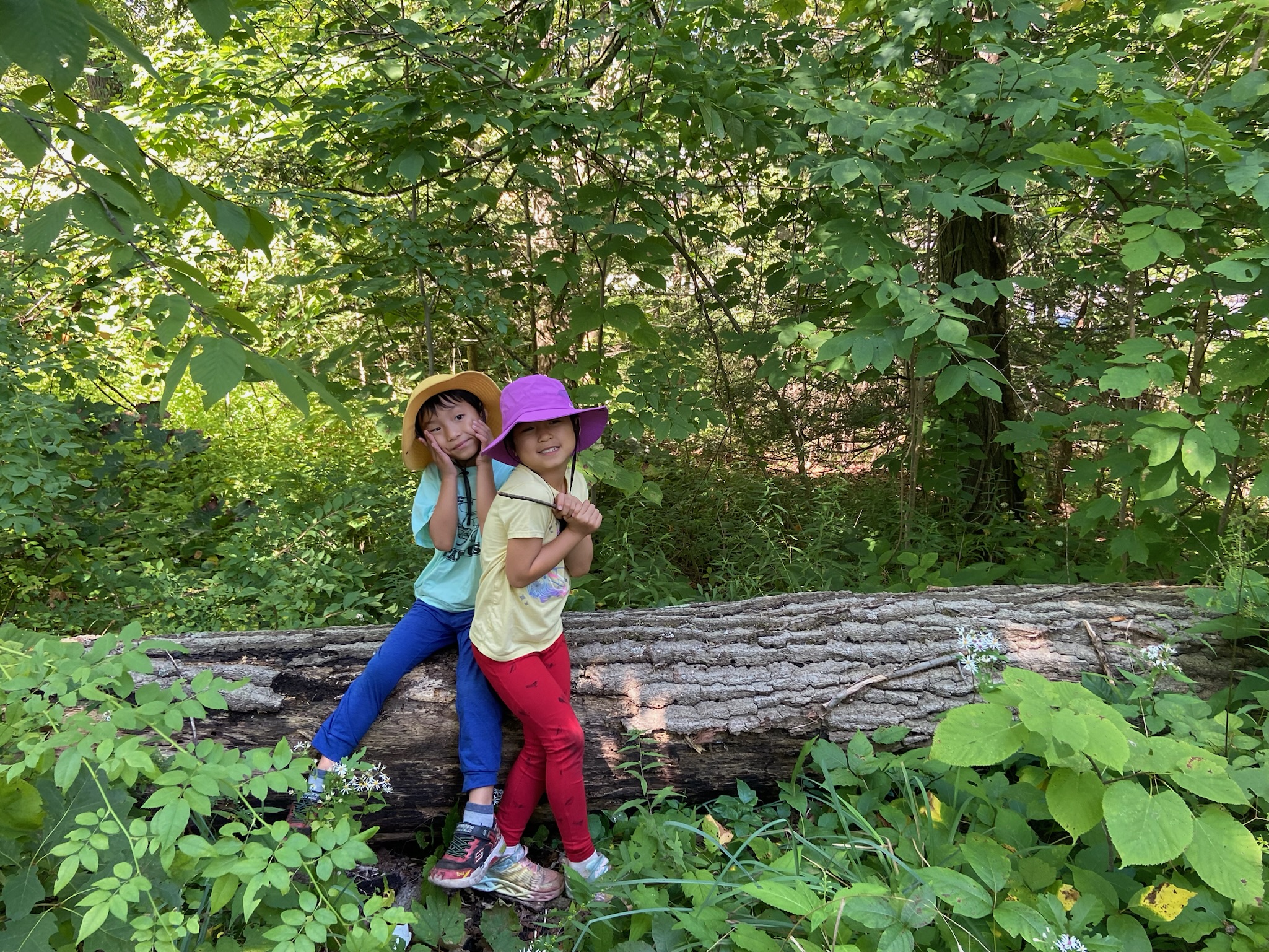
Lately, Little Bao has been really busy. His bilingual school’s Chinese teacher asked the students to read one Chinese book a day, five days a week. This week, on top of those five books, he also has to read an additional five and write a book report. It felt like so much that I had to check with the teacher to see if he really needed to do 10 books and 4–5 reports in a week. The teacher clarified that he can choose to read either one or two books a day. While he finishes most of his homework during the after-school program, he still has to complete the reading at home, which has been taking a lot of time and leaving him with less time to play.
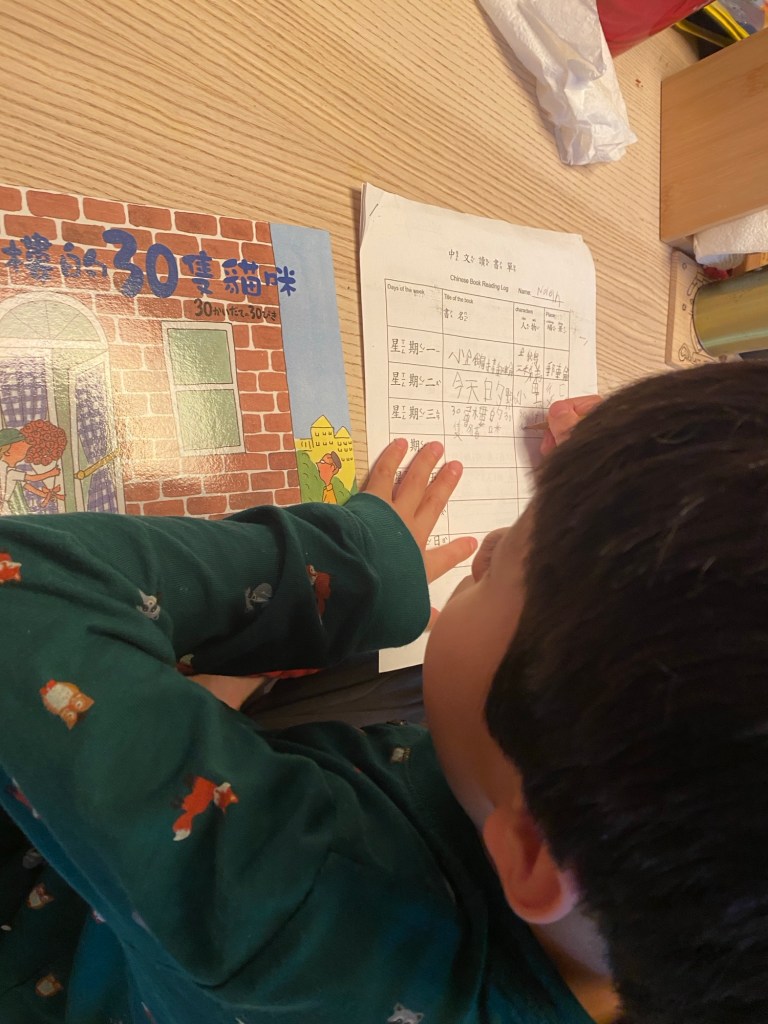
Although every day is a bit of a struggle, he’s starting to get used to the process—picking a book, reading it, and then doing the log or report. Recently, I’ve been reflecting on this, especially after hearing from other families who also struggle with Chinese homework. Whether kids find it tough or eventually get used to it, I think parents’ attitudes play a big role.
For me, staying firm but encouraging has been my approach. If there’s too much writing, I let Little Bao take a break. Sometimes, I let him have juice or snacks while he’s working through boring drills. On weekends, there’s usually a reward like TV time or something fun to motivate him to finish quicker.

At Little Bao’s age, self-discipline isn’t quite there yet, so I sit next to him to keep him focused. Little Bun, on the other hand, has become much more independent and can complete her work on her own.
For parents struggling to get their kids to do Chinese homework, I’d recommend creating a routine. Once it becomes a habit, kids begin to see it as part of their daily tasks—just like regular schoolwork.

For us, having the reading logs and reports as actual school homework has been a blessing. My kids take it seriously because their teachers grade it, and knowing that their peers are doing the same helps. Even though it’s a lot of work, it’s manageable when approached with structure and consistency.
 Bao & Bun's Bilingual Journey
Leave a comment