Besides Lele books, I’ve been researching graded books/leveled readers developed by Taiwanese publishers but haven’t found much. Then, I discovered a website called SmartReading.net by Taiwan Normal University. This platform categorizes the difficulty of each book with a SR number and matches it to the appropriate Taiwanese grade level.
Based on the website, it appears that the platform is primarily used by Taiwanese schools. These schools can connect the platform to their library systems, allowing students to borrow books directly. One feature of this platform is a test that determines your reading grade level. I briefly looked at the test, and the very first question was too difficult for my kids, so I decided not to have them take it.
I’ve always been confused by bridge books (橋樑書) because even within the same series, the difficulty levels can vary widely. It’s hard to gauge which books are suitable for different levels, especially for overseas kids.
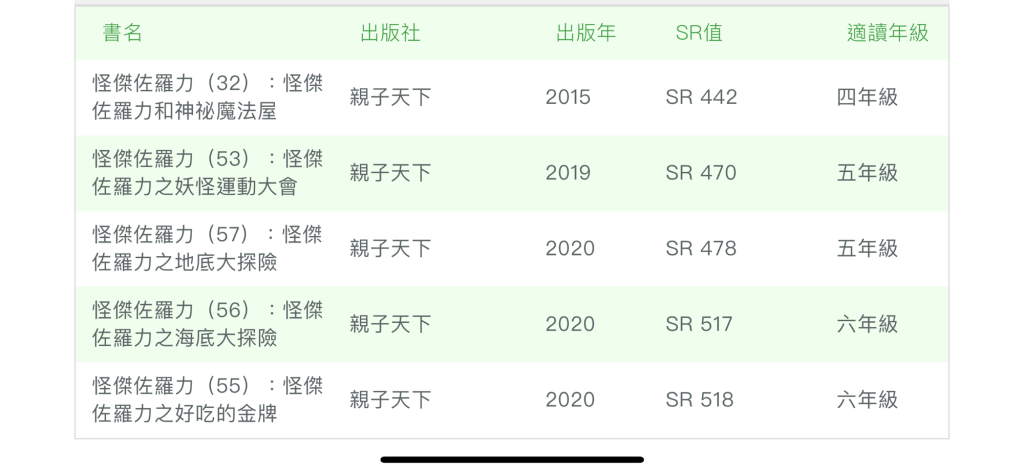
The results I found on this website aligned well with my assessments. For instance, I bought 怪傑佐羅力 a long time ago based on many family recommendations, but found the phrases and idioms difficult. My kids have little interest in it, which makes sense now that I know it’s categorized for fourth, fifth, and sixth grades.
Here’s what I discovered about some books I have:
皮皮與波西: First grade – Aligned with my expectations. I usually recommend this set after Sagebook 500.

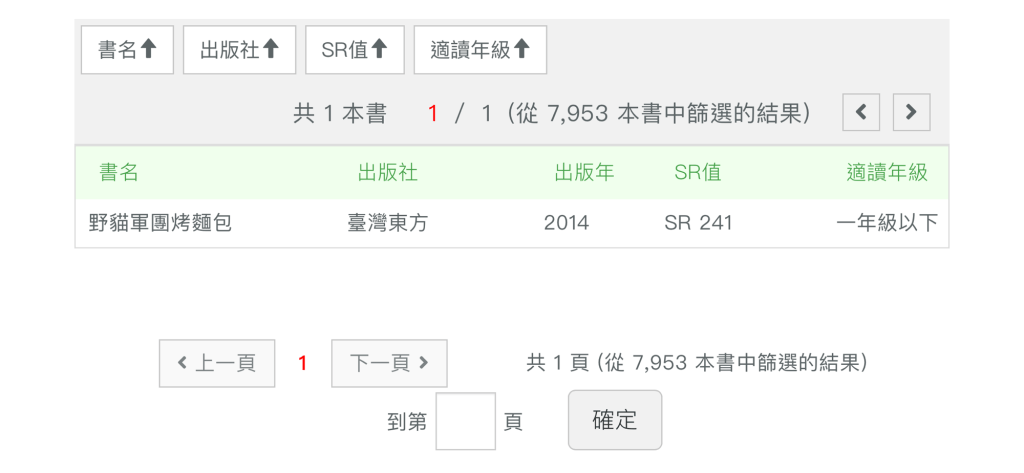
野貓軍團: First grade – This popular series has minimal words and is easy to read, suitable for lower grades.
露露和菈菈: Third grade – Little Bun recently finished these quickly, which makes sense as she knows 700-800 characters and enjoys the content.

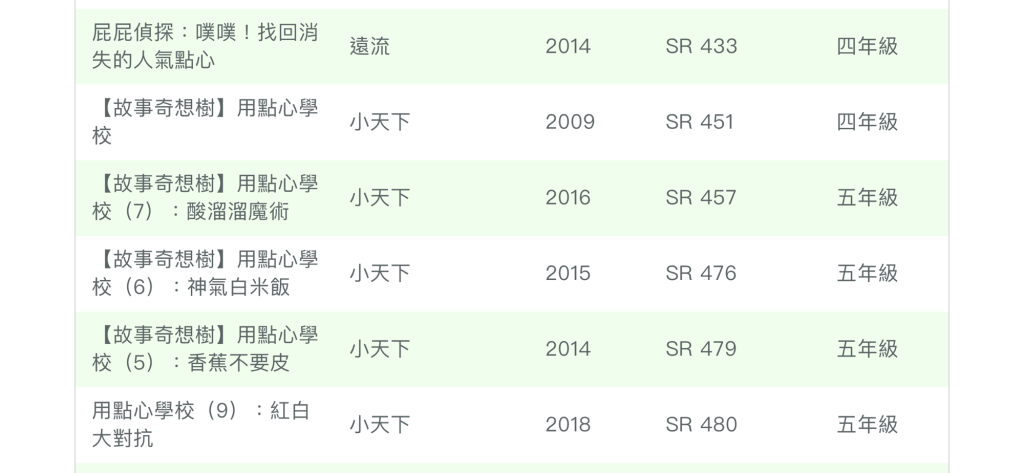
用點心學校: Fourth and fifth grade – I bought many books from this series, finding them too difficult for my kids. Knowing it’s for upper grades clarifies why.
怪傑佐羅力: As mentioned, for fifth and sixth grades. I’ll hold onto these books for a bit longer.
哈利波特: Eighth and ninth grades – Though lower grade students enjoy the English version, the translated version is much more difficult. I tried reading the Chinese version to my kids, but it was too challenging.
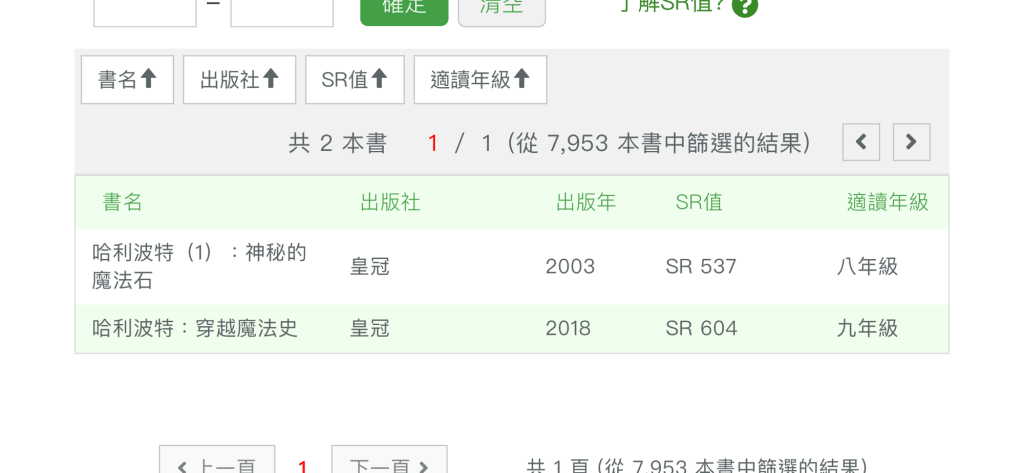
Though I’m glad to have found this tool, a few reminders for myself:
- Little Bun reading third-grade level books doesn’t mean her Chinese is fully at a third-grade level. Chinese learning includes many components such as composition, comprehension, and more. I need to ensure she has targeted learning to strengthen her overall Chinese skills.
- While looking up books and finding appropriate levels is helpful, the tool could benefit from better organization. It doesn’t distinguish between picture books and bridge books. For instance, first grade has over 500 books, making it tough for parents to choose.
If you find any levels that don’t align with your expectations, let me know. I’m curious!
One of the best parts is that their list goes up to 12th grade, so I probably don’t need to worry about future recommendations. There are tons of books to explore, and I’m looking forward to using this platform more and more.
 Bao & Bun's Bilingual Journey
Leave a comment